Twerk This!
Oceans of Motion
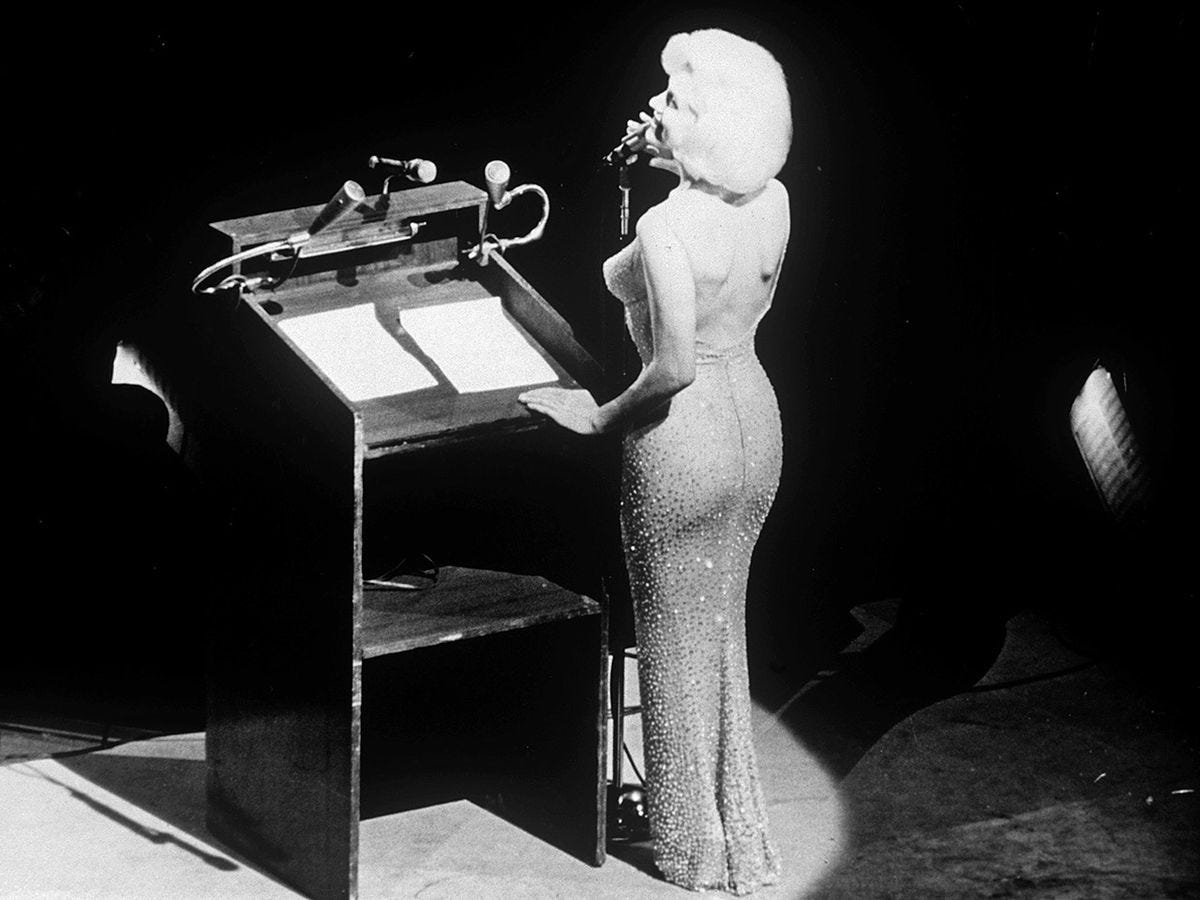
If film footage of Marilyn Monroe shaking her hips in an obviously sexual fashion exists, it seems to be now well hidden. Monroe was often photographed in positions and attire that, by the standards of the 1950s and early 1960s, were close to explicit; yet they did not rise - or fall? - to the overt and energetic sexuality of 21st-century “twerking” such as is now easily viewable on mass-media platforms. Monroe shared 1950s super-stardom with Elvis “The Pelvis” Presley, and the halftime show of a professional sporting event three days ago created almost as much attention and argument as did Presley when he first appeared on national television in 1956. Seven decades have gone by since Presley was first seen via Ed Sullivan’s popular nighttime variety show singing songs like “Don’t Be Cruel.” He had to wait a few years before television cameras stopped cutting him off at the midriff, although still photography enjoyed certain freedoms that film and early video did not.
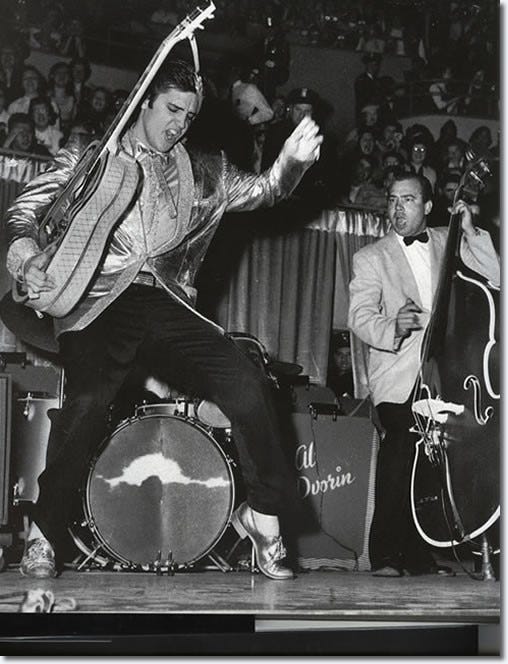
[Elvis Presley’s overt sexuality, even though it was widely presumed to be exclusively of the hetero- variety, was often seen during the 1950s to be an attack on standards of Western male behavior that had been in place since as far back as the early 19th century. Only females had or were “the sex”: men were supposed to be providers and leaders and conquerors. Presley helped broaden his appeal to an older mainstream audience when he entered, or rather was drafted into, the US Army in 1958. He did the standard two years of active duty that was typical for enlisted soldiers of that era; receiving an honorable discharge helped dispel rumors that he was deep down “queer” even as his stage act still included the physicality that had made him extraordinary for a performer conventionally described as white.]
The image of Monroe shown at the start of this blogpost was taken during President Kennedy’s 45th birthday party and only a few months before Monroe’s death at age 36. She remains perhaps the greatest sex goddess in film history, as opposed to the PG-13 romantic or love deities of earlier eras. Rita Hayworth and Theda Bara were clearly examples of how “sex sells,” as it does today with Taylor Swift, but no producer would have dared to present such stars in the sort of Take-Me-Now stance of twerking.
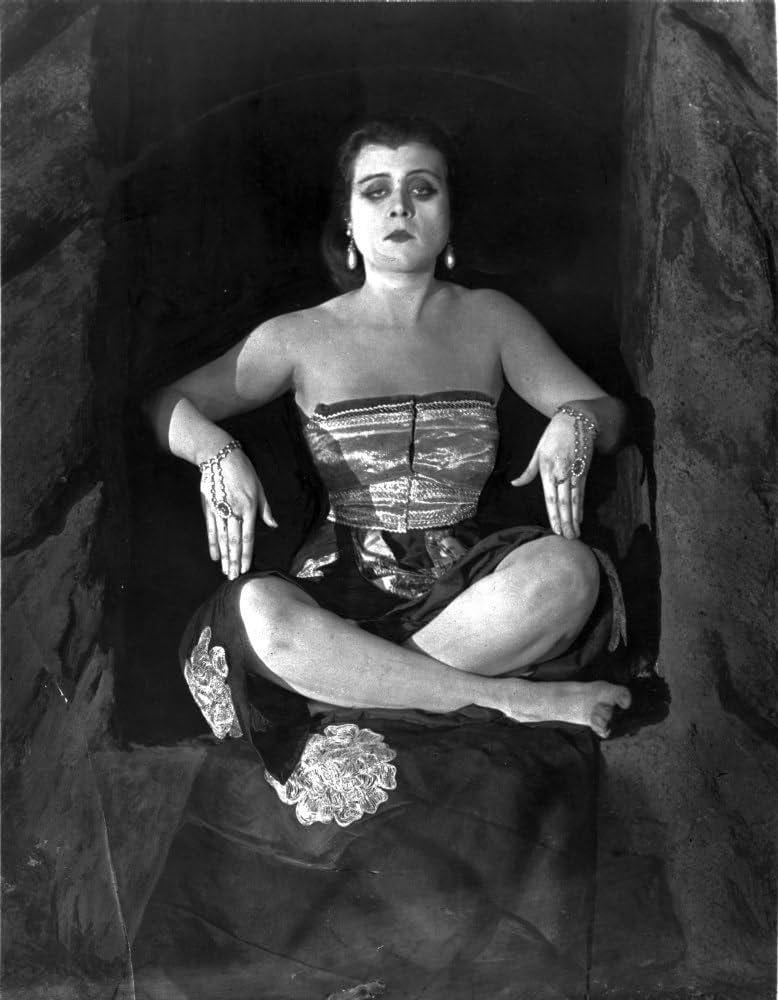
[Theda Bara’s career was centered mainly in the New York area, since the American film industry had not yet fully moved to California before 1920. She was the biggest star in the first generation of the Fox studio but never made a serious effort at a transition into talking pictures. Her own background was the Ashkenazi Jewish community of Cincinnati, to which her father, identified as Bernard Goodman, had immigrated from Poland. The somewhat aggressive posture of this photo, combined with bare feet, were typical of how a sex goddess was presented in the early days of film.]
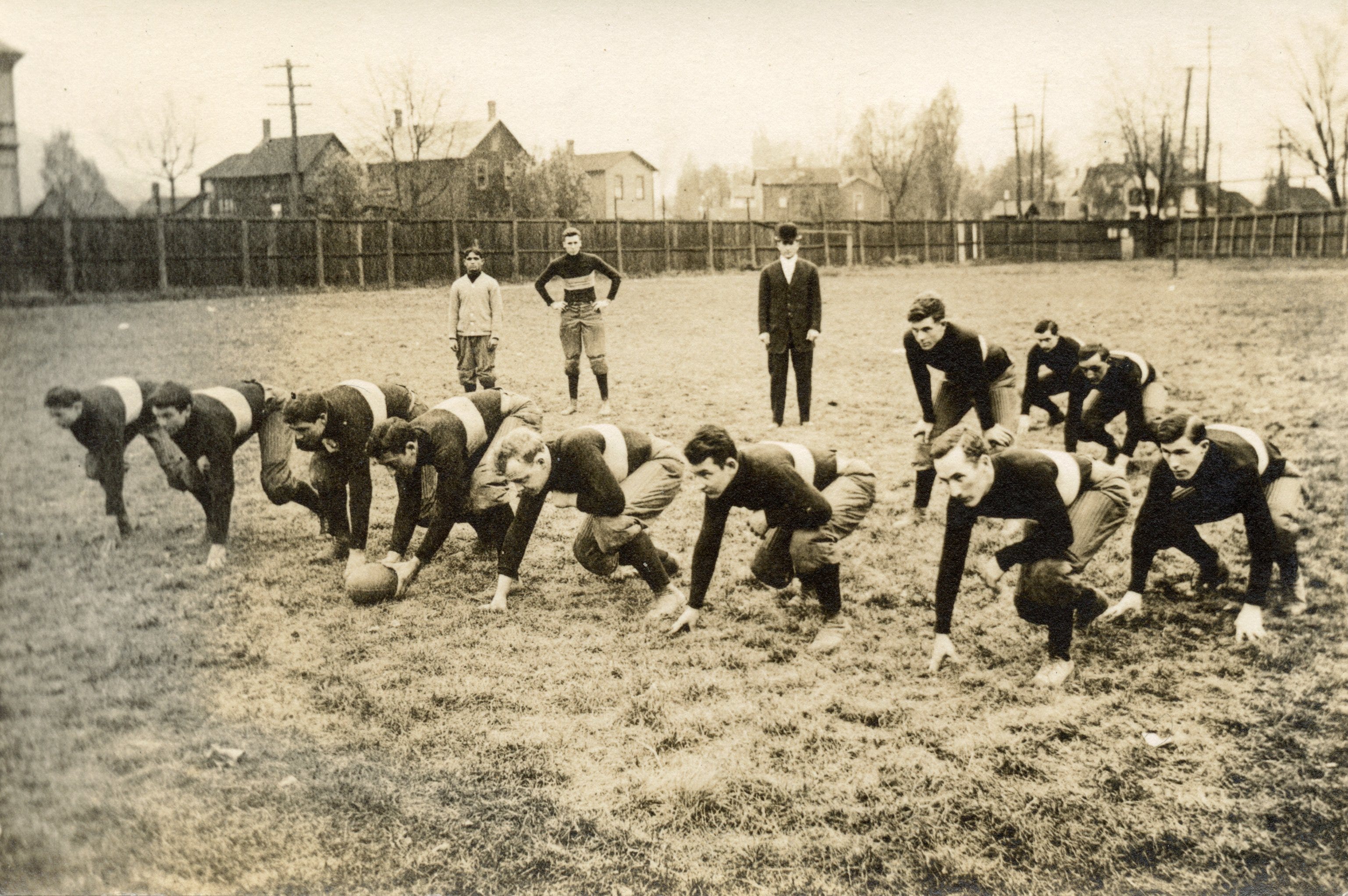
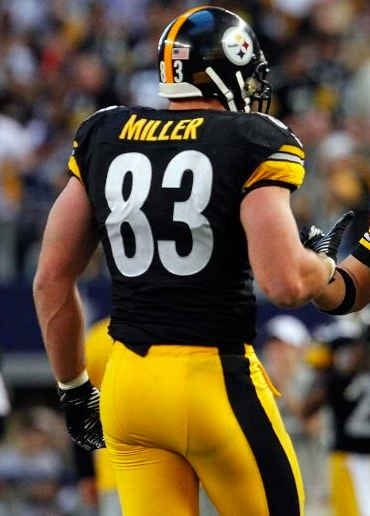
[American males have been photographed and filmed in their version of a “twerk” since the advent of out peculiar version of football during the late-19th century. The quarterback’s or halfback’s view of his offensive linemen was centered right on their glutei maximi, covered up but sheathed with increasingly tight uniform trousers. The padding that was added as the game evolved during the 20th century did not hide the generous muscular proportions enjoyed by most of the young men who came to play the game seriously.]
Debates about the ethnicity of popular performers or on their use of non-English lyrics is hardly new. The era of Monroe herself saw many singers and actors, including Dean Martin and Ritchie “La Bamba” Valens, use lyrics that most Americans never learned the meaning of - but they enjoyed the tunes and the dances that accompanied them, and any existential fear that was felt seemed to dissolve in enjoyment of the music. You didn’t have to be an opera fan to know that Maria Callas - born in New York but to Greek parents - was special, no matter if she were merely humming a nursery rhyme in a strange tongue.
The key difference today seems to be explicit sex, which may appear odd or even ironic given our 21st-century preoccupation with “gender” over physical sexuality. But is it really much of a surprise? Congressman Andy Ogles [no pun of a surname?], more completely known as William Andrew Ogles IV, has represented Tennessee’s 5th congressional district for three years. The 5th was centered on the city of Nashville until recently and had long been represented by some of the last white Democrats - the Cooper family - to win seats in the House of Representatives from states that had been part of the Confederacy. Ogles, by contrast, is a self-identified Christian Nationalist, and gerrymandering made possible his election in 2022 through combining some precincts of Nashville with numerous suburban areas that had long been voting Republican. Earlier this week Ogles made a very public statement critical of Sunday’s Superbowl half-time show: he called it “a performance dominated by sexually explicit lyrical themes [does he know the Spanish originals?] and suggestive choreography.” He wants an investigation by Congress of both the NFL and broadcaster NBCUniversal. On social media he used the phrase “pure smut” and referred to star Bad Bunny “shamelessly grabbing his crotch while dry-humping the air.” Regardless of one’s own view of such actions on a public stage, Ogles at least showed that he or somebody on his staff knew the phrase “dry-humping” and that there was perhaps a gay not-very-sub text to Sunday’s show.
But what about those tight football trousers? - and do Ogles and his allies even know that the phrase “Rock and Roll” was widely understood by 1950 to be a euphemism for sexual intercourse? The first hit song of the Rock era was arguably Sixty Minute Man by Rose Marks and Billy Ward, a combination of African-American and New York Jewish creative & business talent that was characteristic of American popular music in its golden age. Without Blacks and the children of the Ashkenazim - e.g., the Gershwin brothers - we’d have very little to sing about.
The lyrics to Sixty Minute Man were not about timing chicken in the musicians’ (literal) oven. They include the line “I rock ‘em, roll ‘em all night long!” and “There’ll be fifteen minutes of blowing my top!” Still smutty 75 years later?
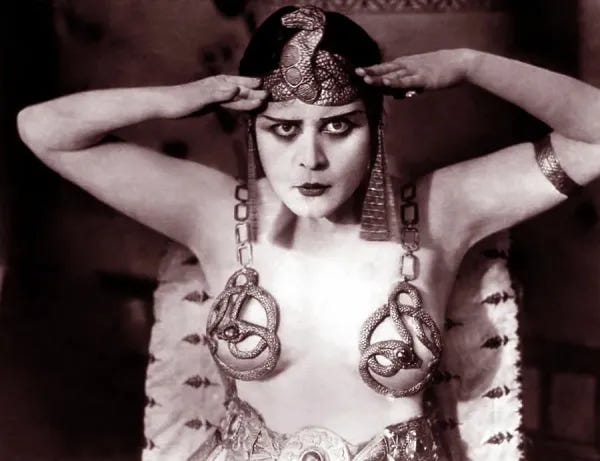
[Thede Bara as Cleopatra. Almost none of that epic film, a six-reeler directed by J. Gordon Edwards and released in 1917, has survived. Only a little over a decade later the Production Code, aka the Hayes Office, had cemented its hold over the American film industry and made such an image as this largely verboten.]